
CAD Blocks categories
 3D models
 home furniture
 sanitary ware - bathrooms
 professional equipment
 doors and windows
 people and animals
 plants and trees
 vehicles - transports
 architectural details
 mechanical - electrical
 urban planning - civil works
 safety health construction
 accessible design
 drawing sheet
 signals
 construction machinery
 accessories and objects
 maps and street maps


Tray Cart Elevation CAD Drawing
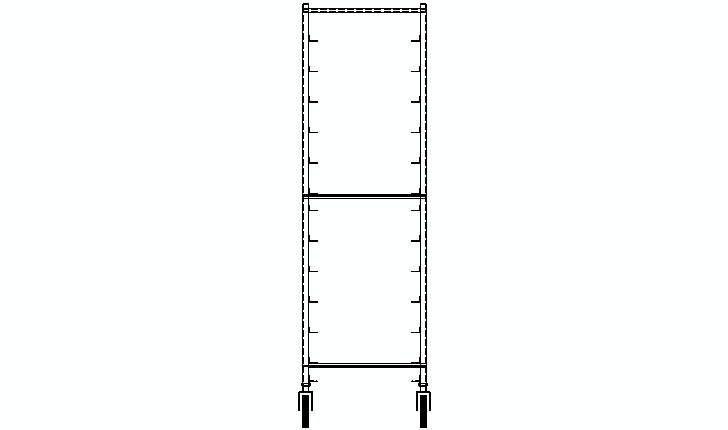
size: 9 kb
category: commercial, business and industrial equipment - commercial kitchen
description: tray cart in elevation view
file extension: .dwg CAD - AutoCAD software.
Industrial Tray Carts in CAD Designs
Introduction to Tray Cart Elevation in CAD
A tray cart, commonly known as a utility cart, is widely used in commercial kitchens, bakeries, and food service industries. The elevation view in CAD provides a detailed side profile of the cart, which is essential for ensuring that it fits well within designed spaces. These carts are usually mobile, with multiple levels for carrying trays, making them ideal for optimizing workflow. CAD files often include these elements to help in kitchen planning or industrial layout designs.
Common Tray Cart Dimensions
Tray carts come in various sizes to accommodate different types of trays. A typical tray cart for bakeries might be designed to carry up to 10 trays, with dimensions around 39.4 inches by 31.5 inches (1000 mm by 800 mm). For other settings, carts may hold trays measuring approximately 18 inches by 36 inches (45.7 cm by 91.4 cm). These dimensions ensure compatibility with standard commercial kitchen equipment, making it easier to integrate the cart into various workflows.
Types of Tray Carts in Use
Tray carts come in different models, each suited for specific tasks. Bakery carts, for instance, typically hold multiple trays for cooling or storing baked goods. Other models include dish racks or general utility carts that may have a larger surface area. The most popular materials for tray carts are stainless steel for durability, although lighter plastic and aluminum versions are also available. Each of these variants has unique advantages depending on the setting they’re used in.
CAD Elevation View in Tray Cart Design
Elevation views are critical in CAD drawings as they show the cart's height and structural details, such as the number of tray levels and the positioning of the handles and wheels. This view allows designers to plan how the cart will fit into a kitchen layout, considering space limitations and other furniture. Elevation views are typically available in DWG format, a popular file type for AutoCAD software, which allows for easy integration into larger architectural projects.
Tips for Selecting and Using Tray Carts
When choosing a tray cart, ensure that its size and load capacity match your requirements. For example, in high-traffic kitchens, a cart with locking swivel casters is ideal for added safety. Also, consider models with removable trays or adjustable shelves for greater flexibility. For CAD designs, including elevation views of tray carts alongside fixed shelving units can optimize space planning and ensure better efficiency in food preparation or other tasks.
 click and go back to other industrial - commericial kitchen CAD blocks:


click to download more related 3D CAD blocks:



click and go back to other comercial equipment CAD blocks:



© 2025 CADblocks.click. All rights reserved